



Operating scope

We support controlled document and
finance workflows for reviewed accounting records.
Invoice extraction
Supplier invoices are read into structured fields, checked for required values, and separated when totals, dates, tax fields, or identifiers require review by finance staff.
Statement reconciliation
Statements and supporting records are organized for comparison against expected balances, payment references, and ledger activity, with exceptions routed to reviewers.
Ledger coding
Extracted records can be prepared with account codes, cost centers, entities, and review status so posting decisions are traceable before submission.
Review workbench
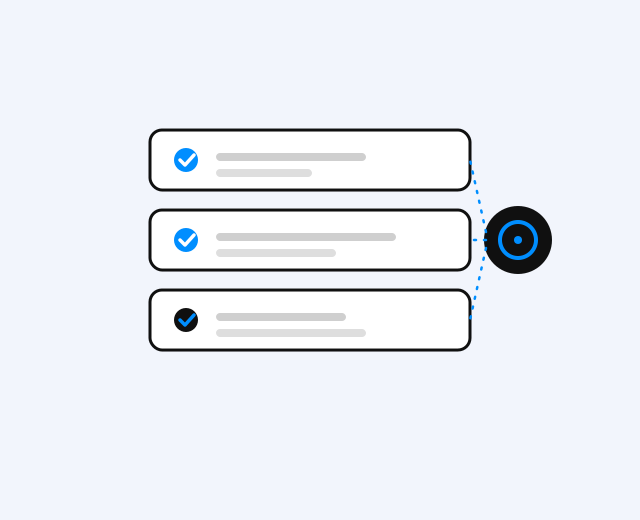
Finance reviewers receive organized queues for approval, correction, exception handling, duplicate review, and final sign-off before records are released.
Validation controls
Field checks, tolerance checks, duplicate checks, and required-document checks help identify records that should not proceed without additional review.
Finance exceptions
Ambiguous documents, missing approvals, unusual values, and unmatched statement items are retained with reasons and routed to accountable teams.
Controls
Structured extraction
Key invoice and statement values are captured into structured records so finance teams can review consistent fields rather than re-entering entire documents manually.
Cross-field validation
Totals, dates, supplier identifiers, tax fields, payment references, and statement values are compared against the agreed finance control model.
Human sign-off
Records that require accounting judgment, policy approval, or exception treatment remain subject to human review before final release.
Ledger-ready output
Approved documents can be prepared as posting-ready records with coding, status, evidence, and reviewer notes available to accounting teams.
Audit evidence
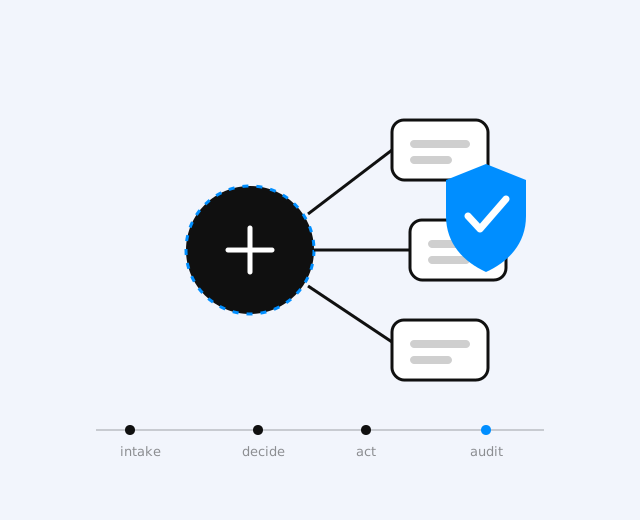
Each extracted value, validation result, exception reason, approval, and handoff state can be retained for audit inquiry and management review.
Controlled updates
Extraction rules, validation tolerances, coding conventions, and review paths are changed under supervision rather than informal adjustment.
System handoff
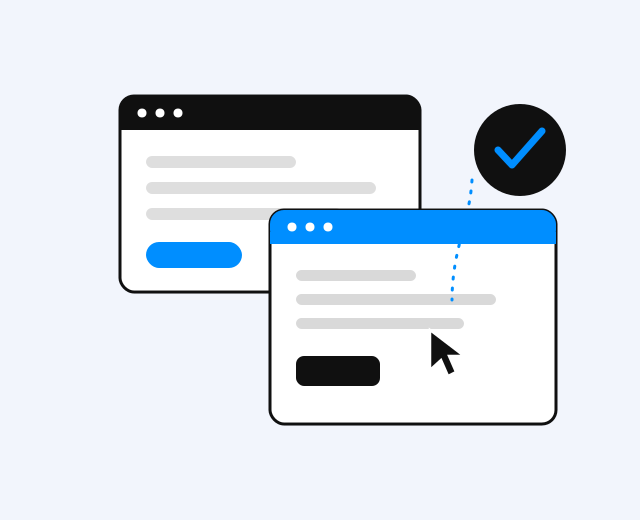
Reviewed records can be prepared for finance systems with the data, status, and supporting evidence required by the receiving process.
Finance scenarios



FAQ
1. What document types are in scope?
The primary scope is invoices, statements, and finance records that must be extracted, validated, reviewed, and prepared for accounting or compliance workflows.
2. Can finance teams retain approval control?
Yes. Human sign-off can remain mandatory for defined document categories, value thresholds, exception types, policy conditions, and final ledger release.
3. What validation checks can be applied?
Checks may cover required fields, totals, dates, supplier identifiers, tax values, payment references, duplicates, purchase order matching, and statement reconciliation conditions.
4. How are exceptions handled after extraction?
Exceptions are separated from routine flow with a reason, source evidence, and proposed reviewer queue. The record remains available until an accountable person resolves it.
5. Can outputs be prepared for finance systems?
Yes. Reviewed records can be prepared with the fields, status, coding, and evidence needed by the receiving ledger, ERP, or finance workflow.
9. What is needed to begin assessment?
We need sample documents, current review rules, ledger requirements, exception categories, approval responsibilities, and any compliance obligations that govern finance records.

