Loading...

Enterprise Voice AI

Conversational systems for established enterprise telephony

We implement voice AI that works with existing telephony and contact-center infrastructure, instrumented to telecommunications standards and governed for enterprise operations.
View approach

telephony-ready

measurable

governed

caller-aware

auditable

available

monitored

integrated

telephony-ready

measurable

governed

caller-aware

auditable

available

monitored

integrated

telephony-ready

measurable

governed

caller-aware

auditable

Call intent handling

Caller intent is classified within approved service categories so responses remain aligned with enterprise policy.

Enterprise Voice AI
at NC1:

Telephony fit

Voice systems are introduced alongside existing telephony estates rather than forcing replacement of approved infrastructure.

Clear call paths

Conversation flows are kept orderly, with defined routes for information, transaction, escalation, and transfer.

Response discipline

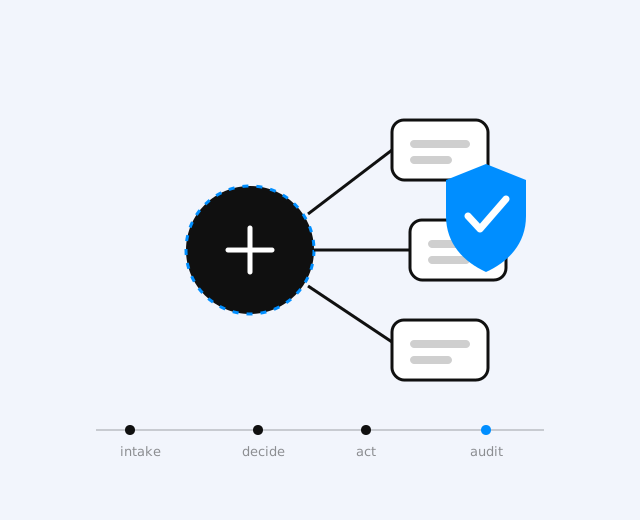
Answers and actions are governed by approved operating boundaries, escalation rules, and retained conversation evidence.

Managed updates

Prompts, routing rules, and approved responses are reviewed before change so service behavior remains controlled.

Live interaction

The system can conduct structured conversations, gather details, and hand off to staff when approved thresholds are met.

Transfer control

Escalation to agents, queues, or departments is specified in advance and documented as part of the call outcome.

Standards awareness

Instrumentation is aligned to telecommunications operating expectations for reliability, traceability, and review.

Call records

Conversation summaries, dispositions, exceptions, and transfer states can be retained for enterprise review.

Scenarios

A dispatch-focused voice AI scenario receives incoming calls, classifies the request, gathers required details, and routes the case to the correct operating queue. Transfers, unresolved questions, and caller context are recorded so supervisors can review handoffs without reconstructing the conversation after the fact.

An appointment-focused voice scenario handles routine scheduling calls, verifies required information, and escalates ambiguous cases to staff. The system preserves disposition records, transfer reasons, and caller summaries so the enterprise can monitor demand, service quality, and unresolved inquiries.

A service-desk voice AI scenario answers structured questions, collects identifiers, and separates routine service requests from matters requiring specialist attention. Call evidence and operating outcomes are retained so managers can review volume, routing accuracy, and exception causes.

A logistics voice scenario manages high-volume inbound calls, captures shipment or service references, and routes urgent issues to the correct department. The design supports monitored transfers, after-hours intake, and conversation records that remain available for operational review.

alt

Telephony fit

Existing PBX

Existing PBX

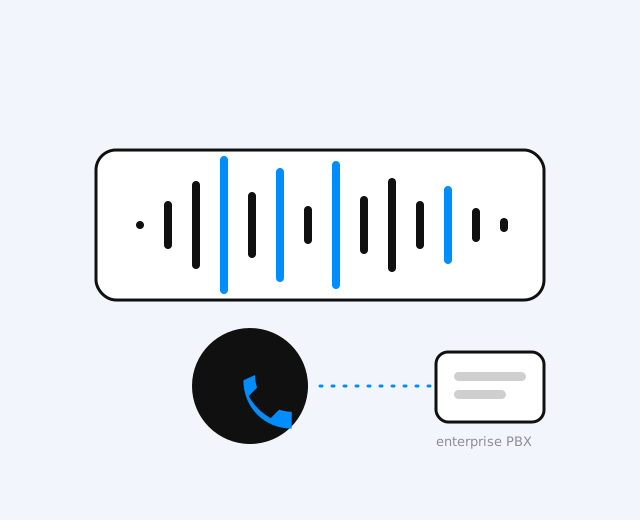
Enterprise Voice AI can be introduced alongside approved PBX and routing arrangements. The engagement focuses on call handling, service rules, transfer behavior, retained records, and operating evidence, so infrastructure owners can evaluate the service without assuming wholesale replacement of telephony assets. Instrumentation is treated as part of the operating control model, not as decorative analytics.

Contact center

Contact center

Voice AI is fitted to contact-center procedures through defined queues, transfer rules, summaries, and exception handling. Supervisors retain visibility into call disposition, unresolved matters, and service quality signals, while agents receive context instead of unstructured transcripts.

Custom workflow

Custom workflow

Where standard call paths are insufficient, the operating workflow can be specified around the enterprise's own service obligations. The scope covers approved answers, intake questions, escalation conditions, verification records, and management review points while preserving the existing telecommunications environment.

Contact form

Leave your contact details

Complete the short form and describe the voice channel or call process to be assessed. For urgent matters, use the contact below:

Enter the phone number as +country code and number, without spaces.

FAQ

1. What is Enterprise Voice AI intended to handle?

It is intended for structured voice interactions such as intake, routing, status questions, appointment handling, service desk calls, and after-hours coverage where operating rules can be defined.

2. Does the service require replacing existing telephony infrastructure?

No. The service is designed to work with existing enterprise telephony and contact-center arrangements where that infrastructure remains the approved operating environment.

3. How are calls measured and reviewed?

Instrumentation records dispositions, transfers, exceptions, containment, and quality signals. The exact review model is agreed before deployment and kept aligned with operating controls.

4. Can callers be transferred to live staff?

Yes. Transfer conditions are defined by queue, department, business rule, risk level, or caller need. The handoff can include a concise context record for the receiving team.

5. How are approved responses governed?

Answers, scripts, routing rules, and escalation conditions are maintained under change control. Updates are reviewed before release so caller handling remains consistent.

7. What is needed to begin assessment?

We need the target call types, current routing model, escalation rules, service policies,
expected outcomes, and the teams responsible for operational review.